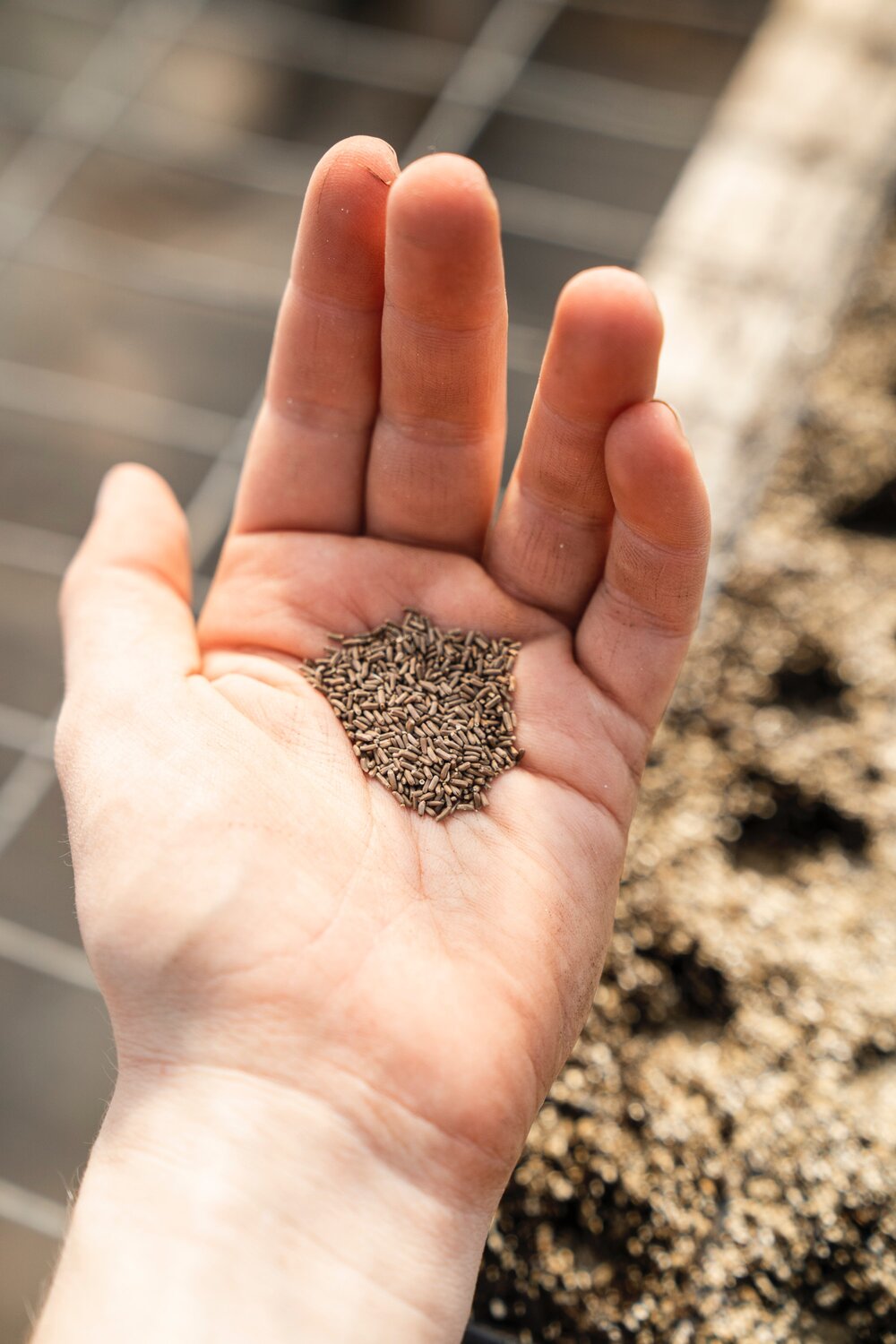
If you have a veggie garden or are interested in starting one then chances are you have heard of Heirloom seeds. But what exactly are Heirloom seeds?
Heirloom seeds are seeds that have been handed down from generation to generation. They are selected for having outstanding traits or flavours. In addition, Heirloom seeds come from plants that have been open-pollinated. This means that they are pollinated naturally through insects, the wind or birds. As a result, Heirloom seeds can be saved and replanted and resemble the parent plants. Most importantly, Heirloom seeds are not hybrids or of a GMO variety.
ADVANTAGES OF HEIRLOOM SEEDS
- They have more flavour and are more nutritious than hybrid seeds
- Heirloom seeds cost less than hybrid seeds
- You can save the seeds to replant
DISADVANTAGES OF HEIRLOOM SEEDS
- They don’t give as large a yield as hybrid seeds
- Heirloom seeds are less resistant to disease
- They produce a less predictable harvest
Now that we have looked at what Heirloom seeds are and some of their advantages and disadvantages let’s explore other types of seeds. Another option when it comes to seeds is hybrid seeds.
WHAT IS A HYBRID SEED?
A hybrid seed is produced through cross-pollinating plants. This is done through hand pollinating different varieties of plant species. The idea is to incorporate the best genetic traits of both parent plants in hybrid seed. Consequently, a type of super seed is produced. It’s important to note that Hybrid seeds are not GMO (genetically modified organisms).
Hybrid seeds have the following advantages and disadvantages.
ADVANTAGES OF HYBRID SEEDS
- They are more disease resistant than other plants
- Hybrid seeds are stronger
- They are more resilient
- Hybrid seeds adapt better to stress
DISADVANTAGES OF HYBRID SEEDS
- Hybrid seeds are more expensive
- They are less nutritious and less tasty than Heirloom seeds
- Saved seeds may be sterile so you can’t always grow another crop
- Saved seeds will not produce plants that are similar to the hybrid
Now let’s take a closer look at what GMO (genetically modified organisms) seeds are.
WHAT ARE GMO SEEDS?
GMO seeds are seeds that are not produced naturally in nature. Instead, they are produced in a laboratory using biotechnology techniques like gene splicing. What this means is that scientists change a seed’s DNA to ensure it produces certain characteristics. Consequently, GMO crops have had genes added to them. This can be for reasons like pest resistance and improving their growth to name a few.
By contrast, Non-GMO seeds are produced as a result of pollination. This either happens naturally through open pollination (eg: Heirloom seeds) or by hand (eg: Hybrids). As such, both hybrids and Heirloom seeds are non-GMO seeds.
ADVANTAGES OF GMO SEEDS
- They can produce more nutritious food
- GMO seeds can produce tastier food
- They can be more disease and drought-resistant
- Fewer pesticides are needed
- GMO seeds are more insect resistant
DISADVANTAGES OF GMO SEEDS
- Food grown from GMO seeds can cause allergic reactions
- There is concern that there may be links between food grown from GMO seeds and cancer
- GMO food can cause an increase in antibiotic resistance
- Insect biodiversity is reduced because the crops are resistant to insects
- The seeds are patented and controlled
There is understandable concern around GMO seeds in terms of the health issues they are linked to and also the control of food. GMO seeds have the ability to reproduce. However, farmers have to sign contracts with the seed companies agreeing not to harvest and replant their seed. As a result, new seeds have to be purchased every season from companies (like Bayer) that control them.
As a result, this should be alarming to all of us. Food is an absolute essential to life and as such is something that should never be controlled.
The very best thing we can all do is to become as self-sustaining as possible in terms of our water needs, energy needs and food.
Contact us today for water filtration, solar energy and insulation quotes!