Categories
Sustainable Living Veggie Gardening

THE PROS OF HYDROPONICS

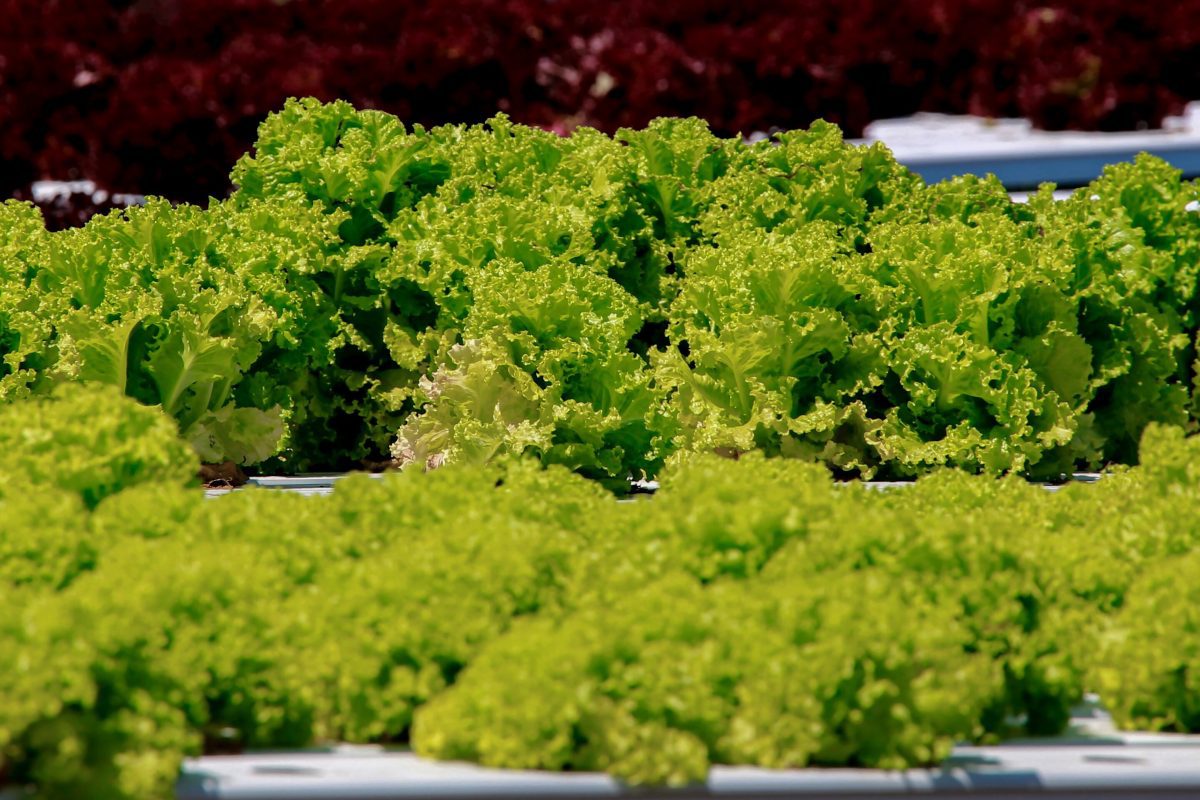
Hydroponics is a way of growing plants and veggies without the use of soil.  Instead, the plants grow in water that has nutrients added to it. This method of growing veggies comes with both pros and cons.  In today’s blog, we’re going to look at the pros of hydroponics.

1. NO SOIL IS NEEDED

Plants are grown in water with hydroponics. As a result, this is a real advantage if you don’t have land or space to plant veggies in soil.

2. YOU CAN GROW VEGGIES ANYWHERE

With hydroponics, you can grow veggies anywhere, even on the balcony of a flat.

3. YOU CAN GROW MANY PLANTS IN A SMALL SPACE

When you grow veggies with hydroponics the roots of the plants don’t need to spread out to find nutrients.  They get it directly from the water they are suspended in.  As a result, you are able to grow many more plants in a smaller space.

4. CONTROL OVER THE CLIMATE

You can grow your crops year-round despite the changing seasons with hydroponics.  This is because you have equipment with hydroponics that can adjust the temperature, regulate the brightness of the light and control the humidity levels.  You can adjust as needed. 

5. IT CAN SAVE YOU WATER

Despite the fact that you grow plants in water, you actually end up saving water with hydroponics.  This is because you only use around 10% of the water as compared to plants grown in soil. The way it works is that the plants absorb the water they need. The rest of the water is directed back into the system. As a result, water is only lost through evaporation and leaks in the system.

6. EFFECTIVE USE OF NUTRIENTS

With hydroponics, nutrients can be added to the plants in an effective way. You can monitor what nutrients are needed and then add those to the water. In this way, the plants receive exactly what they need when they it.

7. ACCELERATED GROWTH RATE

Hydroponics allows you to control your plant’s environment completely. You are able to regulate factors like temperature, humidity and nutrients. As a result, your plants are now growing in ideal conditions and therefore they have an accelerated growth rate.

8. NO WEEDS

Ask any gardener what they hate when it comes to gardening, and you will hear about weeds. So it’s a real bonus to know that with hydroponics you will not be fighting with weeds as you grow your veggies. This is because weeds are only an issue with soil. Because you are growing your crops in water weeds will not be an issue.

9. FEWER PESTS AND DISEASES

Growing veggies by means of hydroponics means that you will deal with fewer pests and diseases. Because you are growing your veggies in water and not soil you will not struggle as much with pests and diseases. This is because you are growing your plants in a closed, carefully controlled environment.

10. FEWER INSECTICIDES ARE NEEDED

As we know, hydroponics doesn’t use any soil. As a result, as mentioned above there are fewer pests and diseases to work with. Consequently, you won’t have much need for insecticides. This is good news because it means you will be able to grow organic, healthy clean food.

As you can see, there are some incredible pros of hydroponics. However, as with everything in life, there are also cons. We will explore these in our next blog.

More and more people are moving towards living in more self-sustaining ways. It’s definitely a journey and not something that happens overnight. However, it is something we can all pursue to whatever degree we’re able. It’s worth it and we’re here to assist you in this journey!

Contact us for water filtration and water tank quotes!
Categories
Sustainable Living Veggie Gardening

WHAT IS HYDROPONICS?

For those pursuing off-grid living growing your own veggies is absolutely essential.  When it comes to growing veggies we often only think of growing them in soil.  However, there are other methods of growing veggies. One of these methods is hydroponics.  But what is hydroponics? Read on!

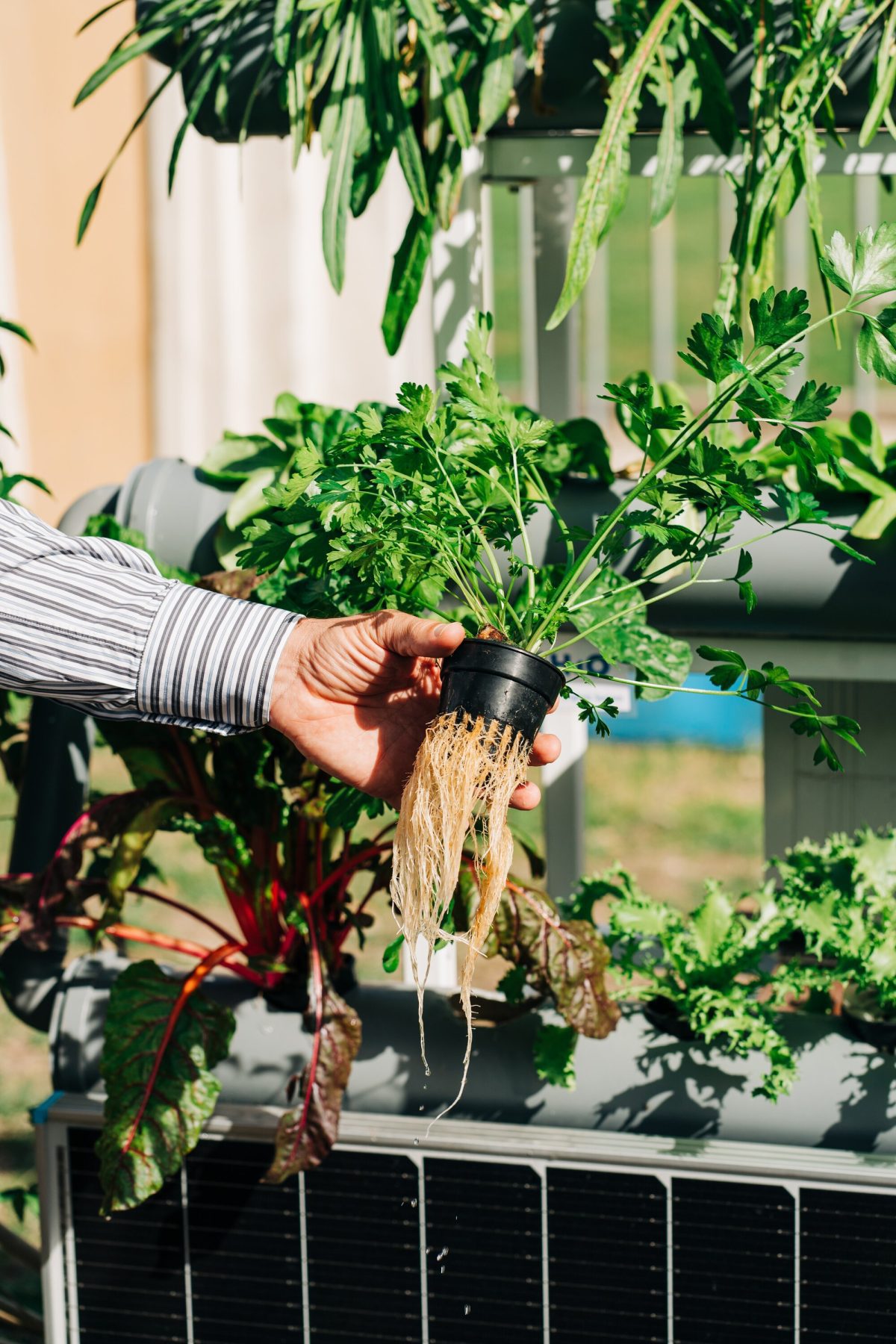
Hydroponics is a way of growing plants in water enriched with nutrients.  The word “hydroponics” comes from ancient Greek with “hydro” meaning water and “ponics” meaning labour. Instead of soil, organic substances like vermiculite, coco coir or perlite are placed in the water for the plants to root in.  As a result, with hydroponics, the water does the work by providing the nutrients that help the plants to grow more quickly.

More and more people are looking into ways to become more self-sustaining in how they live.  Particularly in South Africa, it’s becoming increasingly important to become more self-sustaining.  Our energy crisis and the constant droughts are forcing us to move in this direction.  As a result, many people are now investing in solar, water filtration and food gardens.

A simple step we can all take towards this is to grow our own veggies.  One of the greatest rewards of this is that you will be eating fresh, organic food.  In addition, you will also save money because it can become pricy to buy organic veggies from the shop.  

Contact us for water tanks and water filtration quotes!

Categories
Sustainable Living Water Filtration Water tanks

HOW LONG WILL A WATER TANK LAST?

One of the key elements to off-grid living is to have your own water source.  Collecting rainwater is one way to do this.  As a result, water tanks are an important investment.  But just how long will a water tank last?

As a general rule of thumb, a water tank should last for around 10 years.  Because it lasts for such a long time it provides excellent value for money.  

Depending on what you will use your water for, you may need water filtration. This particularly applies if you want to use your water inside the house.  This is because unfiltered water can damage appliances like your washing machine and dishwasher.  

And if you are wanting to drink your water then it will definitely require water filtration to make it safe for consumption.

As a result, you will need to take a water sample and have it tested.  Thereafter, a water filtration system will be designed to address the issues with your water.

Living off-grid means that you will need to have your own water source and power supply.  Consequently, you will need to have water tanks to harvest rainwater and also to store water if you have a borehole.  So water tanks are a key investment if you are trying to live in a more self-sustaining way. 

Those of us living in South Africa understand clearly the need to live in a more self-sustaining way particularly with the fear of a drought hanging over us and the energy crisis we face.

As a result, we are now looking at ways to be more self-sustaining. This may be through installing solar panels, water tanks, investing in water filtration or even exploring alternative sources of water like boreholes.

Whichever way now, we are all purusuing this in whatever capacity we can. And we at the Green Revolution are here to help you in this journey however we can!

Contact us for water filtration quotes!

Categories
Uncategorized Water Filtration

WHAT IS REVERSE OSMOSIS?

It’s essential to have access to clean drinking water.  This is especially true for off-grid living. As a result, it’s crucial to consider water filtration. When it comes to water filtration reverse osmosis is often a popular choice.  But what is reverse osmosis?  Read on!

Reverse osmosis is a water filtration technique. It will generally remove iron, salt, minerals, and harmful bacteria from your water. It does this by forcing the water through a semi-permeable membrane under high pressure. As a result, only water molecules are able to pass through. Consequently, everything else is restricted from passing through the membrane.

WHAT TYPES OF MEMBRANES ARE USED IN REVERSE OSMOSIS?

There are 3 types of membranes that are used in reverse osmosis. These are:

  • A Tap water membrane
  • A Brack water membrane
  • A Desalination water membrane

For normal household filtration, either a tap water membrane or a brack water membrane should be effective.

As an additional measure, the water should also be treated by chlorination or UV lights. This is to prevent the spread of harmful bacteria.

If you are moving towards off-grid living then securing a clean source of drinking water is essential.  Many people consider drilling a borehole when they think about off-grid living.  This is an excellent first step however, hand in hand with this goes water filtration

Let’s take a look now at the benefits of water filtration.

  • Safe and clean drinking water
  • Pleasant-tasting drinking water
  • Healthy cooking
  • You can save money
  • Protect your plumbing and appliances
  • It helps protect the environment
  • It helps prevent skin irritations

Water filtration comes with some great benefits. You will need to take a water sample and have it water tested. Thereafter a water filtration system will be designed according to your needs.

Contact us today for a water filtration quote, Cape Town!