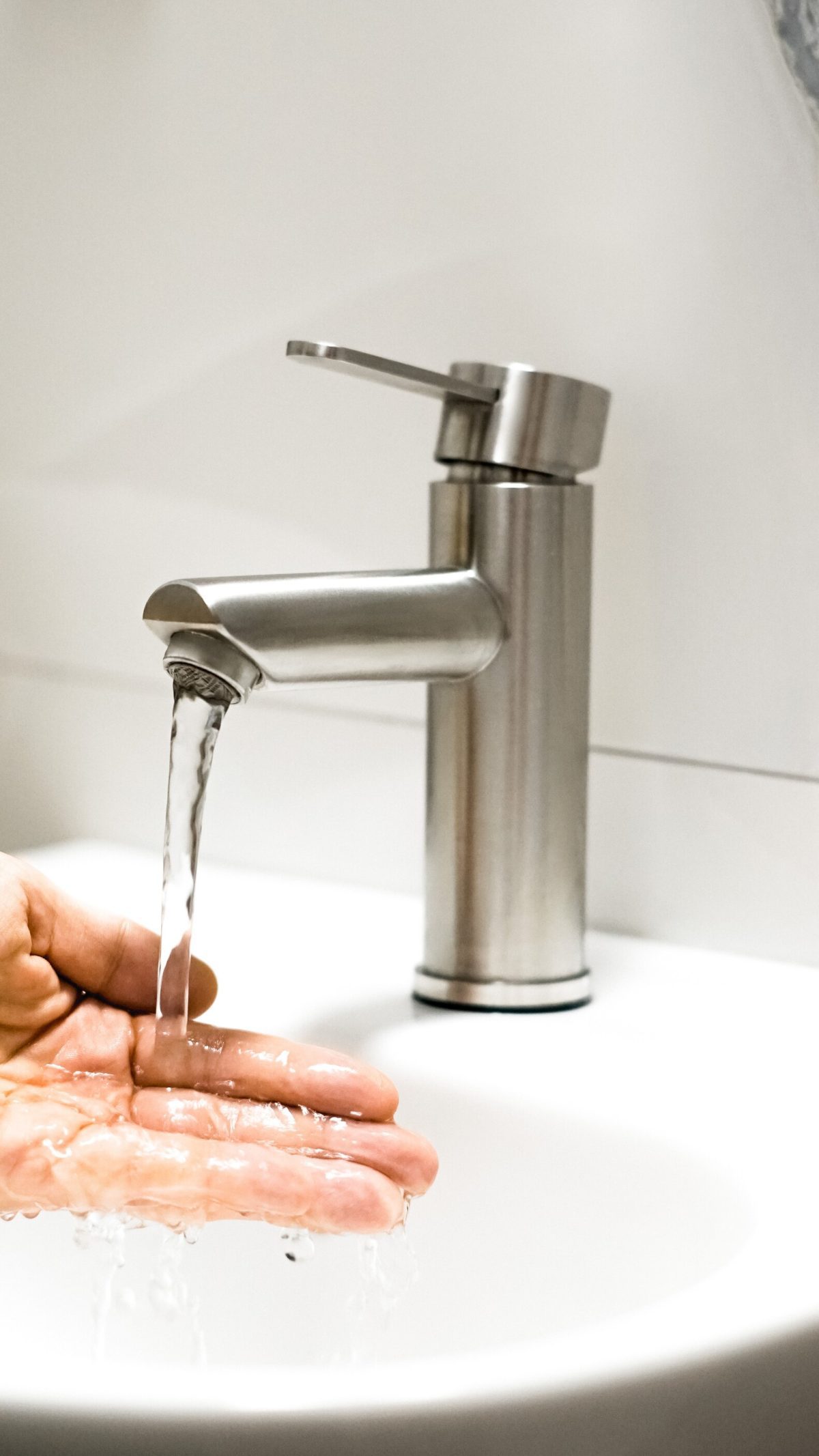
You may have heard of the term “water filtration system”. But what exactly is a water filtration system? A water filtration system refers to a system that filters out pollutants in water. As a result, pollutants like particles, sediment, harmful chemicals, and bacteria are filtered out. Consequently, the water is usable for drinking and/or household use.
WHY IS WATER FILTRATION IMPORTANT?
In Cape Town, we often struggle with the quality of our tap water. And from time to time we get warnings from Council to boil our tap water before use. This is due to contamination.
As a result, it’s essential to consider water filtration for your home. Pollutants can occur in our tap water through things like load-shedding which can affect the running of the water treatment plant.
IS WATER FILTRATION NECESSARY WITH BOREHOLE WATER?
If you are using borehole water then it’s essential to do a water analysis test on your water. The type of water filtration you need will depend on the results of your water analysis test and what you intend to use the water for.
It’s important to note that borehole water can become contaminated. This can happen in the following ways:
- Unsealed borehole cover
- Incorrectly sealed borehole casing can lead to polluted water entering the aquifer
- A nearby source of contamination (septic tank etc)
Contamination of your borehole can occur in various ways which is why it’s important to test your borehole water from time to time to ensure the quality of your water.
The water filtration option you need will be based on what you will use the water for. If you are wanting to use your water for drinking water then you will need to filter it for all of the options mentioned below.
If you will only use it outdoors then you would only need to address some of the factors.
WHAT OPTIONS ARE AVAILABLE FOR WATER FILTRATION?
The following are some of the options available for water filtration:
- Sediment filtration
- Iron removal
- Bacterial control
- pH control
Let’s take a closer look now at each of the options.
1. SEDIMENT FILTRATION
A leaf beater contains a sieve and this can be positioned just beneath the downpipe of your water tank. Consequently, leaves and other debris from your gutters are trapped before reaching the water in your tank.
The sieve lies at a 45-degree angle. This enables the water to flow through the sieve and into the tank while the leaves wash away. Any coarse sediment exceeding the size of the sieve is washed off along with the leaves.
Small microparticles of sediment are able to slip through the sieve and into the water. However, a Big Blue Filter is attached to deal with this.
WHAT IS A BIG BLUE FILTER?
A Big Blue filter consists of 3 filters. It has two sediment filters and one carbon block filter. The two sediment filters have different-sized filters. The first one has a 10-micron filter and the other has a 1-micron filter.
Filters are measured in microns. A micron is defined as “a unit of length equal to one-millionth of a metre” To give you a visual of the size of microns consider that a particle of dust is roughly the size of 1 micron.
The two sediment filters remove unwanted sediments like algae, rust, sand, and mud effectively.
Between these 2 sediment filters lies a middle-sized filter. It contains an activated carbon block. This removes odours from the water and chlorine. Additionally, it also assists with filtration. This filter will improve the odour, colour, and taste of your water.
Water flowing through these filters is treated for odours and fine sediment.
The Big Blue filter has a flow rate of around 2720 litres per hour. The filter cartridges of the Big Blue will need to be replaced every 6 months or when the water pressure drops.
You can also use AFM filters to deal with Sediment. These filters contain glass that is manufactured to the optimum particle size and shape. The water is pushed through this glass media and sand, sediment, dirt, and rust are trapped and removed from the water.
The glass media filters the water down to 3 microns and does not need to be replaced continually. This is because it can be back washed and cleaned.
2. IRON REMOVAL AND BACTERIAL CONTROL
Reverse osmosis will generally remove iron, salt, minerals, and harmful bacteria from your water. With reverse osmosis water is forced through a semi-permeable membrane under high pressure. Consequently, only water is able to pass through. Everything else is prevented from passing through.
There are 3 types of membranes that are used in reverse osmosis. These are:
- Tap water membrane
- Brack water membrane
- Desalination water membrane
For normal household filtration, either a tap water membrane or brack water membrane should be effective.
As an added measure the water should also be treated by chlorination or UV lights to prevent the spread of harmful bacteria.
3. pH LEVEL CONTROL
Borehole water that has a pH level of less than 7 is acidic. Consequently, it needs to be corrected. This is because it can cause staining and corrosion and wouldn’t be safe for consumption.
pH levels that are too acidic can be corrected. This is done by using a corrosion-resistant chemical feed pump. Consequently, sodium hydroxide solution is released into the water. As a result, this helps to neutralize the water.
Water filtration is essential these days. As a result, it’s important to have a water analysis done on your water. Then the correct water filtration system can be installed. As a result, you protect your health and drink clean water. There are so many great benefits to water filtration. It’s so worth it!
Contact us today for water filtration, solar energy and insulation quotes!